
The brief
Formed in 1996, Teamwork Trust is a Northamptonshire charity supporting adults with autism, learning disabilities and mental health challenges. Its members attend centres where they build independence, learn skills and work towards their own goals.
Its tagline is “empowering every ability together” and they mean it. Members co-produce the schedules and the activities. So members had to be at the centre of social media too.
Helen Burdett-Wright, the CEO, understood what marketing could do for the organisation, and social media was part of a process that reshaped the charity’s marketing presence.
Social media came first, a rebrand came a year later and the new website came after that.
Success at a glance
The starting point
There was activity, but no real strategy underneath it.
Social media had been handled in-house alongside a long list of other duties, so it was never anybody’s sole focus. Facebook was the main channel, and it was mostly photo albums. A hundred images from an activity, uploaded in a batch, without much context as to what it meant for the charity, its members and volunteers.
Nobody had defined exactly who the charity was trying to reach or what it wanted them to do, but the foundations were there and everything worth posting about was already happening in the centres every single day.
Our first job, as is the case in all social media management partnerships, was to define and refine the strategy.
Who a charity like this needs to reach
The first job was working out who we’re talking to. For Teamwork Trust it’s a wider group than you’d assume:
- Potential members, and the people who refer them
- Parents, families, carers and loved ones
- Potential volunteers
- Community supporters
- Corporate partners
Five audiences, one underlying ask: Support us or join us.
That could mean somebody enquiring about a place for their son or daughter. It could mean a business getting in touch about a partnership. It could mean somebody buying a raffle ticket at an open day.
All of it counts, and all of it starts with people understanding what the charity actually does.
↳ The result: A defined audience and clear purpose behind every post, adding a layer of strategy to all activity.
The strategy: Three things we post about
Life at Teamwork Trust
Most people have never set foot in a day centre supporting adults with learning disabilities. They have no picture of it at all, which makes it very hard to refer somebody or offer to help as a volunteer.
So this first pillar opens the doors. What happens at Teamwork Trust day to day? What sessions do they run? What do the centres and community feel like?
The difference between this and a photo album is the why:
“Today the members made pasta” is a caption. What actually happened is that members planned a meal, went out and bought the ingredients, handled knives in the kitchen and built their independent living skills doing it.
It’s the same activity, but one shares the narrative that tells you exactly how the charity enriches the lives of its members.
↳ The result: Content that shows what the members actually do and how it helps them, rather than just what their day looked like.
People and partners
Teamwork Trust is its people. The members are full of character, worth and humour – and none of that comes across in a statistic about learning disabilities.
If you have nobody in your life with autism or a learning disability, you may arrive with a preconception or a bit of hesitancy about how to act. Showing the people themselves does more to shift that than any amount of explaining.
So we run staff spotlights, member Q&As, and content with the community partners who come through the doors, like the local team of solicitors who volunteer, or the historian who comes in to give talks.
Partner content also earns new eyeballs, because collaborations reach audiences the charity would not otherwise get in front of.
↳ The result: A charity that people can relate to and recognise by its members, not just by the brand.
Invitation
There is a version of charity social media where nobody ever asks for anything and another version where every post is a bucket being shaken at you.
Neither works as well as a healthy balance.
So the third pillar we established is a steady drip of invitation: “We’re hosting this, this is how it’ll benefit the charity’s members, and you’re welcome. We have an open day, come along. There is a place for you here.”
It’s the simplest of the three pillars but it does most of the commercial lifting, because the first two pillars have already done the work of making people want to say yes.
↳ The result: A charity that asks regularly and comfortably, without ever guilt-tripping its audience.
Working inside the centres
Ryan visits a centre once a month. Each visit produces a staff interview on video plus a batch of photography and footage with the members, and the content to capture is all planned out before he arrives.
Walking into a Teamwork centre is not like walking into an office.
There are 30+ people there at any given time, all with different personalities, needs and requests. Some members don’t want to be on camera, either, and that is absolutely their right.
The answer is never to move somebody out of shot or ask them to go elsewhere. It’s their centre and we are guests there. So Ryan works around the team, changes his angle, reassures them they’re not in it, and shows them the footage so they can see for themselves.
Ryan had experience in this world before he had an agency. He worked in the mental health sector earlier in his career and volunteered for several years as a befriender, visiting the same person every week.
That background is a large part of why Teamwork Trust hired him.
↳ The result: A monthly content operation that has never had to exclude anybody to get the shot.
The stories you only get by looking up
The best content in a place like this is never on the shot list.
On one visit Ryan noticed a member ironing crisp packets. Ear defenders on, deep in concentration.
He was fusing the crisp packets together to make survival blankets for homeless people. He went on to complete 22 blankets, with the support of other members, and they were donated to Kettering Street Pastors.
This post came about because somebody walked across a room to ask what was going on and it’s where the charity’s whole purpose becomes visible in 30 seconds of video, or a series of five photos.
↳ The result: A content library built on paying attention, rather than on booking a shoot and hoping.
Why the content library pays for itself
This is the part that gets overlooked when charities weigh up social media spend.
Everything captured over the last 18 months, thousands of photographs and videos, lives in one organised library. The charity draws on it constantly, and rarely for social media.
Grant applications need images, so the Head of Development asks for them regularly.
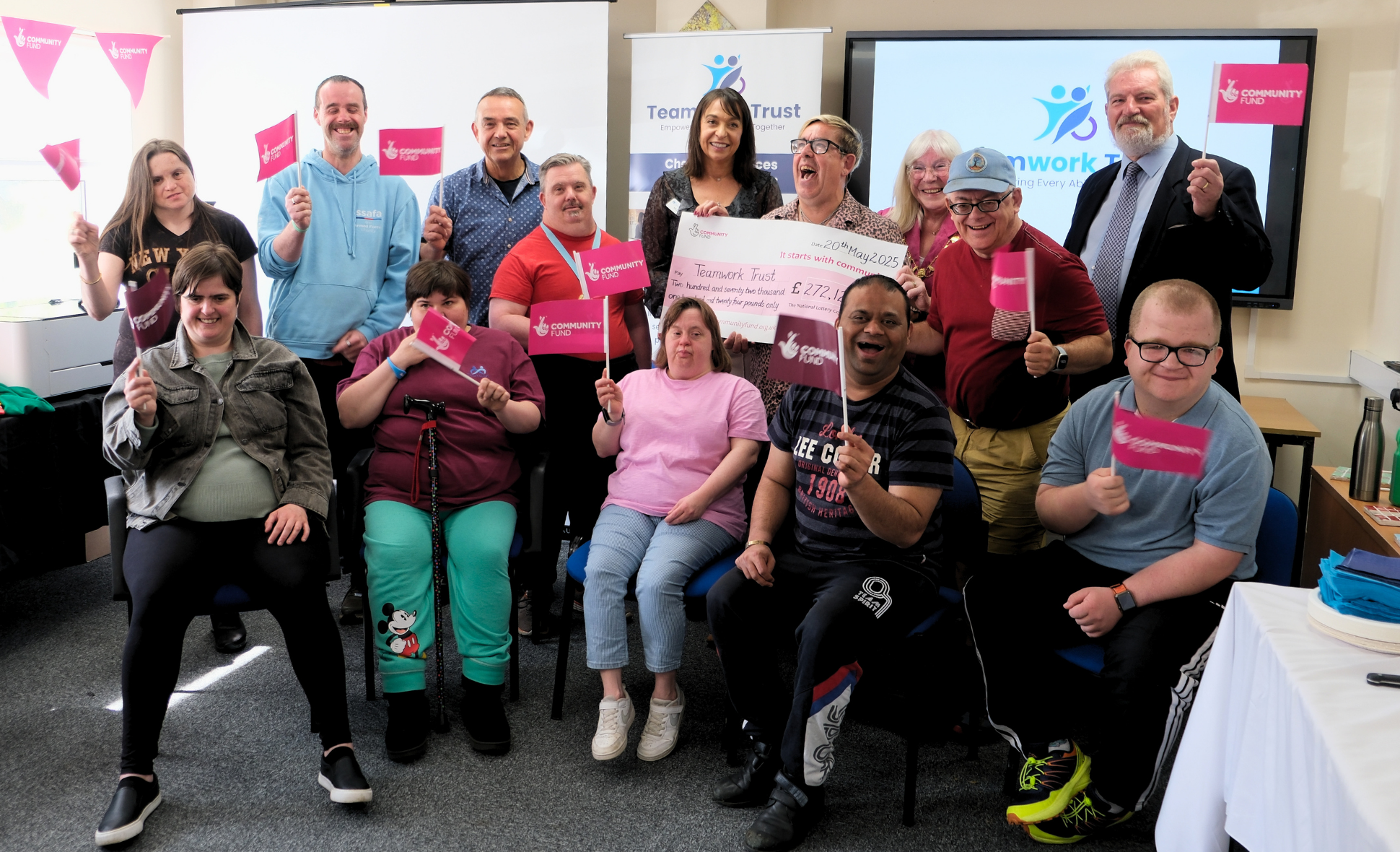
Also, grant reporting needs evidence. When Teamwork Trust was awarded £272,000 by The National Lottery Community Fund, we produced a video showing exactly what the funding was for. When another grant funded a t-shirt enterprise, we produced the video that evidenced what it achieved. There’s a mural on a wall that came from a grant, and a post that shows it.
Funders who can see their money working are more likely to fund you again.
↳ The result: A social media budget that also underwrites the charity’s grant income, adds further value to the charity and increases the return on investment.
"Social with Ryan has had such a positive impact on supporting our strategic goals, and the whole team has enthusiastically got on board with providing content through our WhatsApp group. The biggest thank you from me is for how well Ryan integrates with our members and staff when he visits our centres. Everyone knows who he is, they’re comfortable around him, and they happily carry on with their day while he takes photos and videos. Ryan understands our people, our culture, and he effortlessly lives our values."
Helen Burdett-Wright
CEO
Teamwork Trust




The lesson
Charity social media usually fails in one of two directions. Either it never asks for anything, or it only ever asks.
The middle ground takes more work. You have to show people what actually happens, introduce them to who it happens to, and only then tell them there is a place for them in it.
Teamwork Trust had all of that going on already. Every day, in every centre. It just needed somebody to walk in, notice it, and know how to tell it properly – outsourcing their social media management proved to be the best route to that.
social media working as hard as it could?
We manage social media for charities that want to get their story across on social media. Get in touch with Social with Ryan